

How to get started
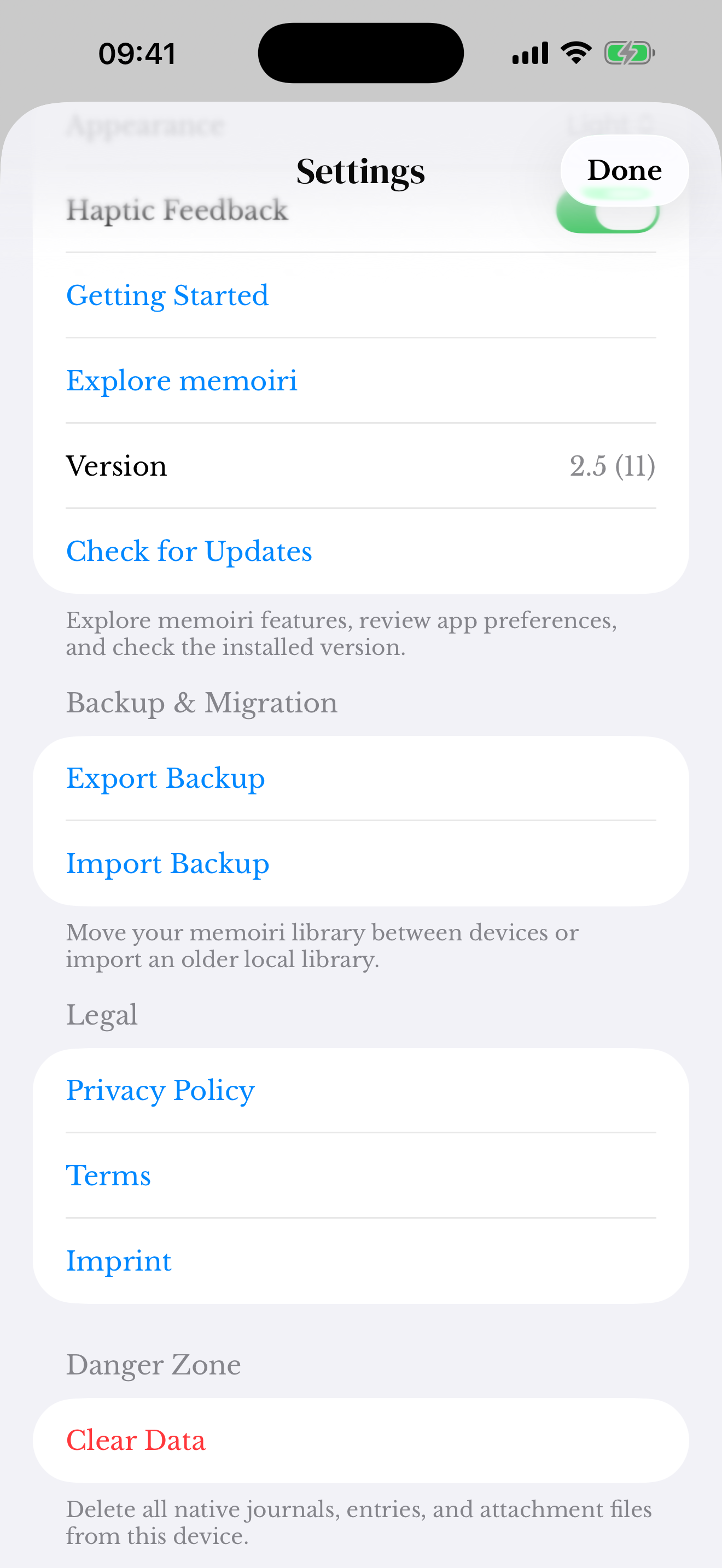
- Open Settings → Backup & Migration → Export Backup.
- Use the system file or sharing options to keep the generated backup in a location you control.
- To restore a compatible memoir backup, choose Import Backup, select the file, and review the import result.
Keep the complete backup
Retain the original backup file instead of extracting a few text snippets from it. A library includes more than prose: attachments and journal organization matter too.
Treat the exported file as private. Anyone who receives a readable copy may be able to access the memories it contains, so choose its storage and sharing destination carefully.
For transfers between your devices, see iCloud Sync. Review sharing and privacy before sending a backup to anyone else.
Know which import you are using
Import Backup accepts compatible memoir backups. It does not accept every PDF, CSV, or export from another journal app.
Import Legacy Library may appear when an older local memoir library is available. That migration is separate from selecting a backup file. Review the reported counts and keep your source until you have checked the result.
Check the result before removing the source
After importing, open the library and check journal names, several old and recent entries, and a few photo or audio attachments. An import message is useful, but checking the memories themselves confirms the result you need.
Save important drafts as entries before exporting; unfinished local writing should not be assumed to be included.
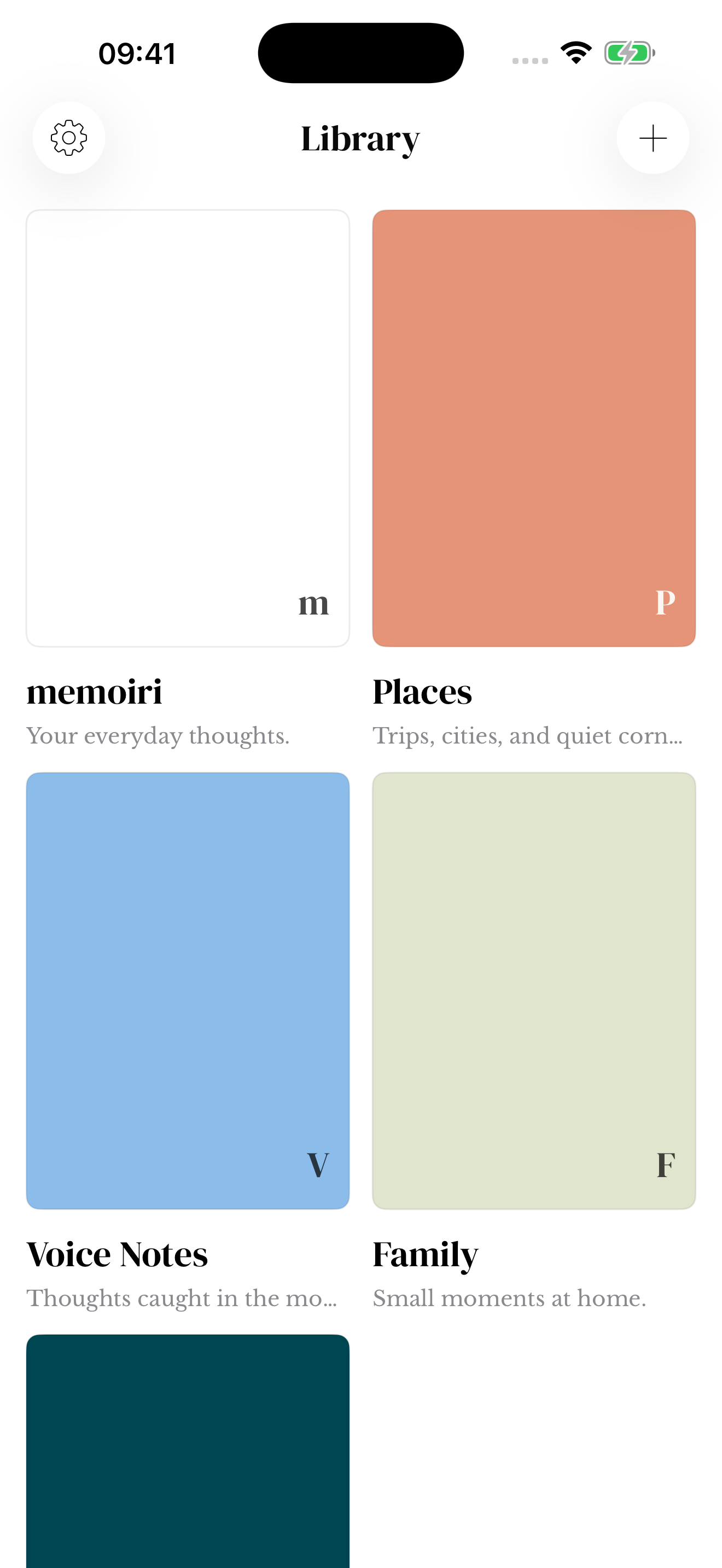
Screenshots use sample content. Labels and available controls can vary by app version and device.